Learn with CogniCuisine
Learn with AI.
Use AI to explore possibilities, then evaluate its suggestions through culinary knowledge, cooking, and your own senses.
One recipe, three views
See the development.
Compare the first proposal with the finished dish, follow the stages, and examine the individual revisions.
A worked example · Barley–teff kofta
From First Draft to Final Dish
Compare the early barley-dumpling proposal with the final barley–teff kofta. Follow the changes in flour, flavor, and cooking method.
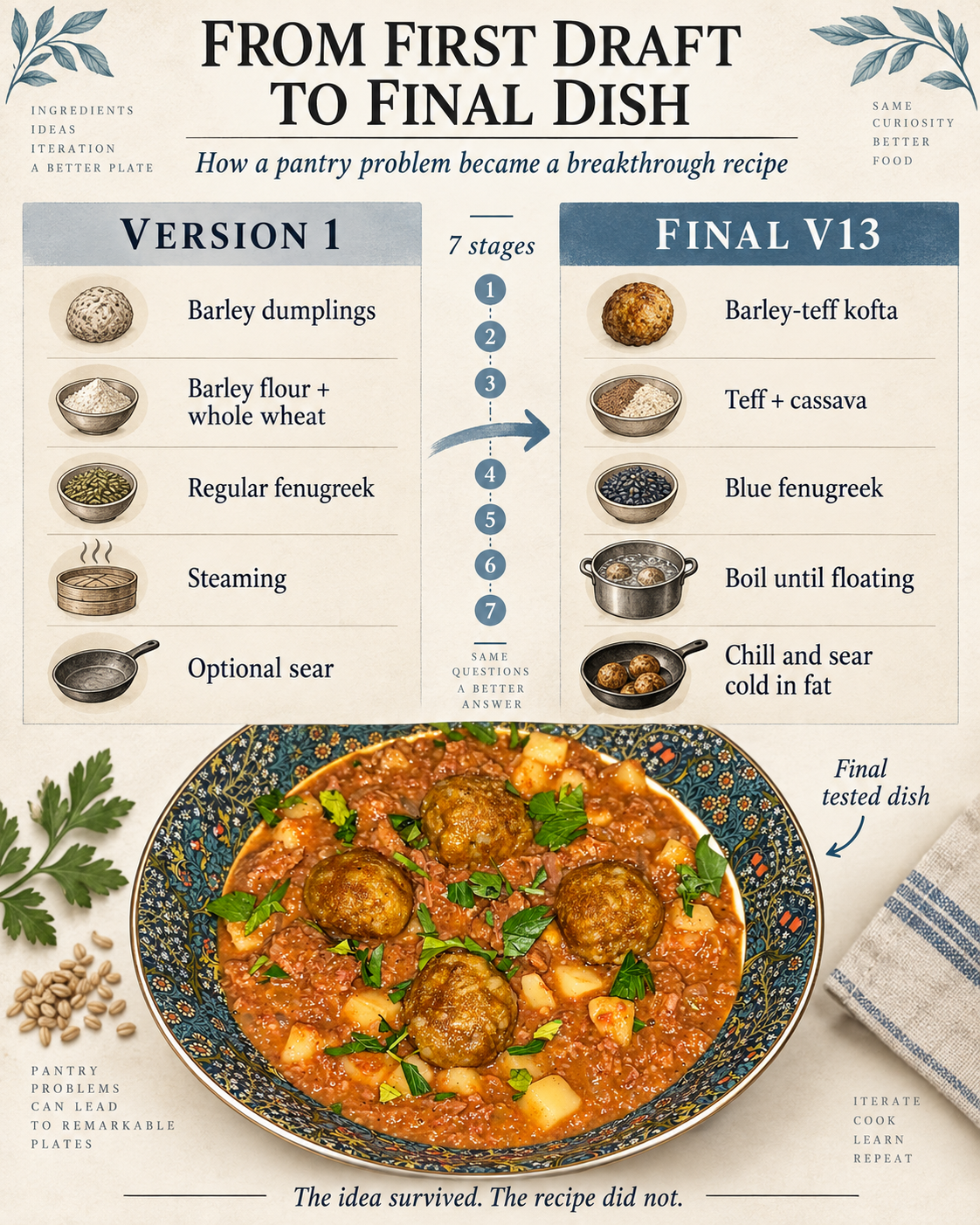
A worked example · Barley–teff kofta
Seven Stages of Development
Ingredient choices change a recipe’s structure as well as its flavor. This example follows the move to teff and cassava, the choice of blue fenugreek, and the kitchen revisions that followed.
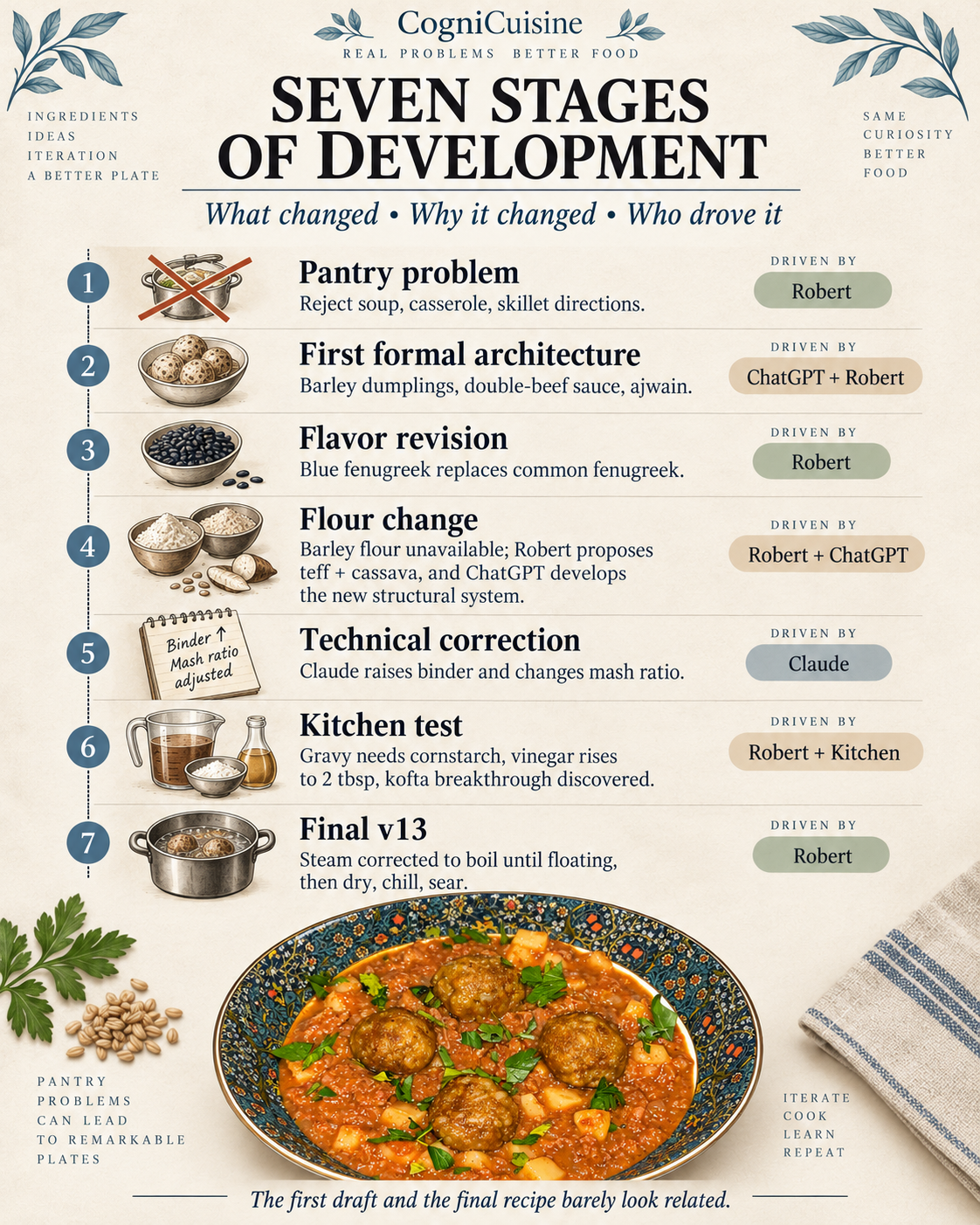
A worked example · Barley–teff kofta
Annotated Facsimile Call-Outs
Follow the key revisions, including the difference between the written steaming instruction and the boiling method used in the kitchen.
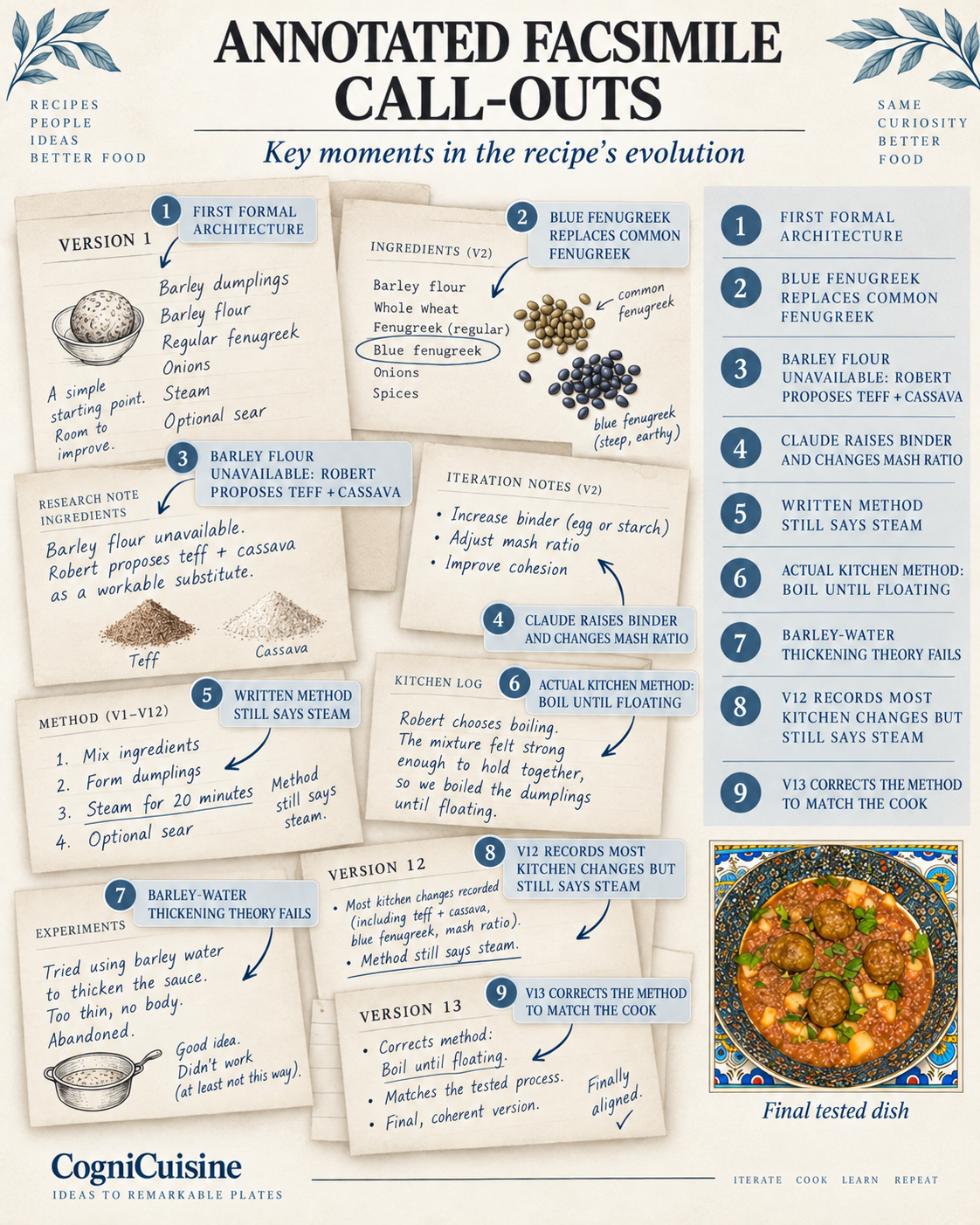
Start with a question you can test.
CogniCuisine teaches a working relationship between the cook and AI. Give the collaboration a clear purpose: a texture you want, an ingredient you want to understand, or a dish that needs another attempt.
The instruction here follows the work: questions, proposed changes, cooking, tasting, and revision. Use the sequence below with a recipe you already understand.
1. Describe the result you want
Name the dish, desired texture and flavor, serving size, equipment, and any actual constraints. Separate those constraints from preferences. A useful question gives the collaboration something specific to solve.
2. Ask what each choice contributes
Ask AI to explain the role of an ingredient or technique. Which parts provide structure? Which add acidity or aroma? Where is the proposal uncertain? An explanation gives you something to examine before you cook.
3. Challenge the proposal
Compare the suggestion with the source recipe and your experience. Ask what could fail and why. Keep the original version so changes remain visible.
4. Cook, observe, and describe
Record what actually happens: a loose mixture, a dry center, a sauce that does not cling. Describe the result precisely instead of asking only whether it is good.
5. Revise with a reason
Choose the problem you want to address and make a deliberate change. Preserve the quantities, method, and tasting notes for the next attempt.
Try it with a finished recipe
Read the labneh pancake recipe and its notes. Identify one decision about texture, one about acidity, and one about when flavor is added.
Open the pancake recipeLearn from the record.
In The Meatball That Broke Two AIs, Robert documents a cooking problem and the persistence needed to work through it.
Read the published case studyExternal · Substack