Flavor knowledge
Ingredients, understood.
Explore what an ingredient contributes, how it behaves, and where that knowledge can take your cooking.
A worked example · Barley–teff kofta
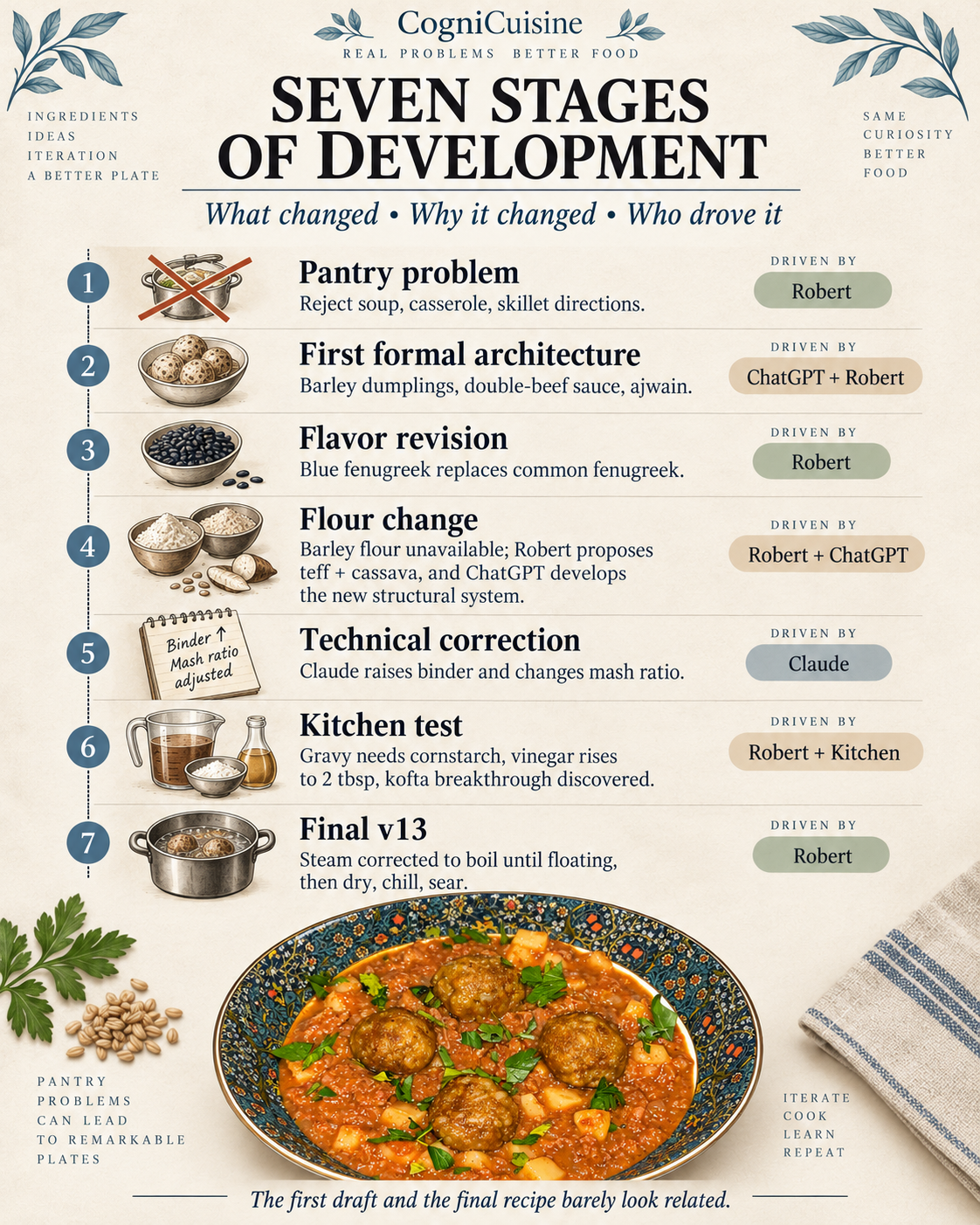
Seven Stages of Development
Ingredient choices change a recipe’s structure as well as its flavor. This example follows the move to teff and cassava, the choice of blue fenugreek, and the kitchen revisions that followed.
Build a vocabulary you can cook with.
Smell, taste, texture, and timing give you useful ways to describe an ingredient. Those observations make it easier to ask a specific question, compare a suggestion, or explain why a dish needs revision.
Flavor Liberation
Study ingredients at three levels: their individual qualities, their roles within a cuisine, and their possible applications in your kitchen.
Explore the frameworkBegin with your own observations.
- Aroma: What does it remind you of?
- Taste: Which qualities arrive first, and which linger?
- Texture: What changes when it meets the rest of the dish?
- Context: How is it used in the culinary traditions you are learning from?
- Application: What specific job might it do in your next recipe?
Watch the exploration.
Bob Tastes puts the first encounter on camera. Ajwain and wattleseed are two recent starting points.
Visit Bob TastesSee the decisions inside a recipe.
The labneh pancake notes distinguish consistency, the timing of aromatics, and choices about tartness.
Read the recipe and notes